
Empathy at the Core, Innovation in Motion
Reflections from the 2026 Columbia University YMEC Global Entrepreneurship Competition
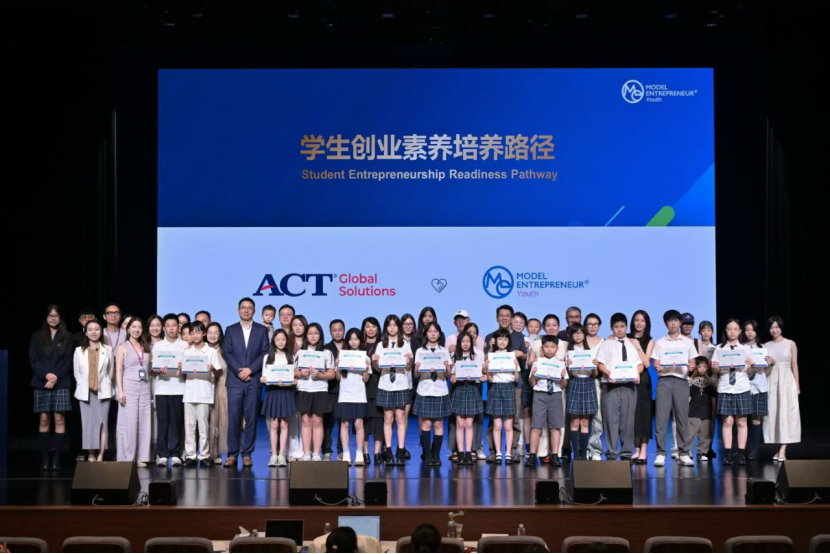
I was honored to serve as a judge for the China regional round of the 2026 Columbia University YMEC Global Entrepreneurship Competition. Drawing on my own experience in MIT entrepreneurship programs and in building an MIT-based startup team, I have spent considerable time thinking about what meaningful innovation education should look like for young people today.

This competition offered a particularly revealing perspective. Across the projects presented by middle and high school students, I saw impressive levels of analytical thinking, technological awareness, and commercial sophistication. Many teams demonstrated a strong grasp of emerging technologies and market dynamics.

But one project stayed with me long after the judging ended.
A team of secondary school students had developed an AI-powered smart-glasses solution designed to assist people with disabilities in navigating everyday life. What impressed me was not simply the technology. It was the way the students had arrived at the problem in the first place.

Too often, youth innovation projects begin with a technology and then search for a problem to solve. Students read online articles, collect secondary research, identify a fashionable technology, and build a solution around assumptions about what users might need. The result can be technically impressive yet disconnected from the realities of the people it is meant to serve.
This team took a different approach.
Rather than designing in isolation, they reached out to disability advocacy organizations and nonprofit associations across different regions. They conducted interviews, spoke directly with users and practitioners, followed up on their findings, and continuously refined their product based on firsthand accounts of everyday challenges.

In other words, they did not begin with, “What can we build?”
They began with, “What does this person actually need?”
That distinction matters.
In entrepreneurship education at institutions such as Harvard and MIT, one principle comes up repeatedly: meaningful innovation begins with listening. Technology is a means, not the end. The sophistication of an algorithm matters far less than whether that technology can meaningfully improve someone’s life.
The strongest entrepreneurial mindset is therefore not simply a combination of technical ability and business acumen. It is the intersection of curiosity and empathy, creativity and responsibility.
What struck me most about this group was the maturity of their approach. At an age when many students are still learning to navigate the world around them, they had already demonstrated something much harder to teach: the willingness to step outside the classroom, engage with people whose experiences differ from their own, and stay with a problem long enough to understand it.
They did not treat social impact as a slogan attached to a technology project. They treated it as a research question.
That is precisely the kind of mindset youth innovation education should cultivate.
The purpose of entrepreneurship and innovation education is not to produce students who simply know how to follow technological trends. Nor is it to turn every young person into a future founder.
Its deeper purpose is to help young people develop the ability to see problems clearly, question assumptions, understand people, and turn ideas into solutions that matter in the real world.
For me, this judging experience offered a simple but powerful reminder: the most valuable quality in the next generation of innovators will not be technical talent alone. It will be the ability to combine intelligence with empathy, ambition with responsibility, and innovation with a genuine understanding of the people they hope to serve.
The innovations that create lasting social value will ultimately be powered not only by what young people know, but also by what they care enough to understand.


Comments